The Complete Timeline of Successful Drain Field Installations
Developing a reliable wastewater system is a fundamental requirement for establishing any functional property located outside conventional municipal sewer grids. Ensuring that your underground components operate properly requires an ordered approach that begins long before machinery arrives to break the soil. Homeowners and commercial site managers can secure smooth operations and protect their initial financial investments by familiarizing themselves with the necessary procedural phases that dictate long-term plumbing reliability.
According to Septic Industry reports cited by WifiTalents (2026), 52,000 new septic permits were issued in 2025, a sharp signal that onsite systems are still expanding faster than many planning documents expect. This dramatic expansion across modern residential markets underscores the vital importance of execute underground utility projects with high levels of structural precision and mechanical accuracy. Adhering to an organized, step-by-step framework during professional drain field installations is the single most effective strategy for preventing property damage and securing decades of reliable utility usage.
Conducting Initial Site Evaluations and Soil Percolation Testing
The entire drain field installations rely completely on the natural absorption characteristics of your property soil to treat wastewater safely before it reaches local groundwater tables. Technicians must first visit the site to perform deep soil borings and precise percolation evaluations, tracking how fast water filters down through various dirt profiles. This critical phase dictates the exact physical footprint, structural orientation, and overall layout of your upcoming treatment area by uncovering underlying clay barriers or high water tables. Different soil textures, such as sand or loam, impact filtration rates differently, making this initial diagnostic phase indispensable for long-term operational success.
Slighting these early calculations or building over unverified soil profiles will lead directly to premature surface flooding, slow structural drainage, and unexpected mechanical breakdowns. By spending the time to thoroughly map out the subterranean topography, technicians can ensure that your specific site layout is engineered to withstand heavy volume demands and avoid localized environmental contamination, creating a safer and more predictable waste management boundary for your entire home.
Navigating Regulatory Permit Approval Procedures and Local Engineering Clearances
Once municipal clear-ahead documents are approved, the construction crew moves forward by utilizing heavy machinery to clear native vegetation and excavate the terrain to exact design elevations. Equipment operators focus on preserving the surrounding soil density, avoiding excessive compaction from heavy tires which would destroy the earth's natural drainage pores. When heavy machinery drives carelessly over the designated absorption zone, it crushes the delicate soil pathways required for efficient water filtration, permanently diminishing the system’s processing capacity. Proper drain field installations and strategic path planning ensure that the site is handled with the absolute highest level of care.
Trenches or open absorption beds are dug with precise, laser-verified slopes that allow wastewater to travel smoothly via gravity throughout the gravel layers without pooling in a single section. Proper site preparation minimizes ground settling issues over time, forming a level and highly receptive underground environment that is perfectly optimized for the upcoming mechanical utilities. This foundational accuracy prevents premature flooding and protects your property landscaping from muddy, waterlogged patches in the future, providing a stable foundation for the entire wastewater distribution system.
Executing Specialized Excavation Tasks and Precision Grading Activities
Once municipal clear-ahead documents are approved, the construction crew moves forward by utilizing heavy machinery to clear native vegetation and excavate the terrain to exact design elevations. Equipment operators focus on preserving the surrounding soil density, avoiding excessive compaction from heavy tires which would destroy the earth's natural drainage pores. When heavy machinery drives carelessly over the designated absorption zone, it crushes the delicate soil pathways required for efficient water filtration, permanently diminishing the system’s processing capacity.
Trenches or open absorption beds are dug with precise, laser-verified slopes that allow wastewater to travel smoothly via gravity throughout the gravel layers without pooling in a single section. Proper drain field installations minimize ground settling issues over time, forming a level and highly receptive underground environment that is perfectly optimized for the upcoming mechanical utilities. This foundational accuracy prevents premature flooding and protects your property landscaping from muddy, waterlogged patches in the future.
Embedding Physical Piping Frameworks and Structural Distribution Materials
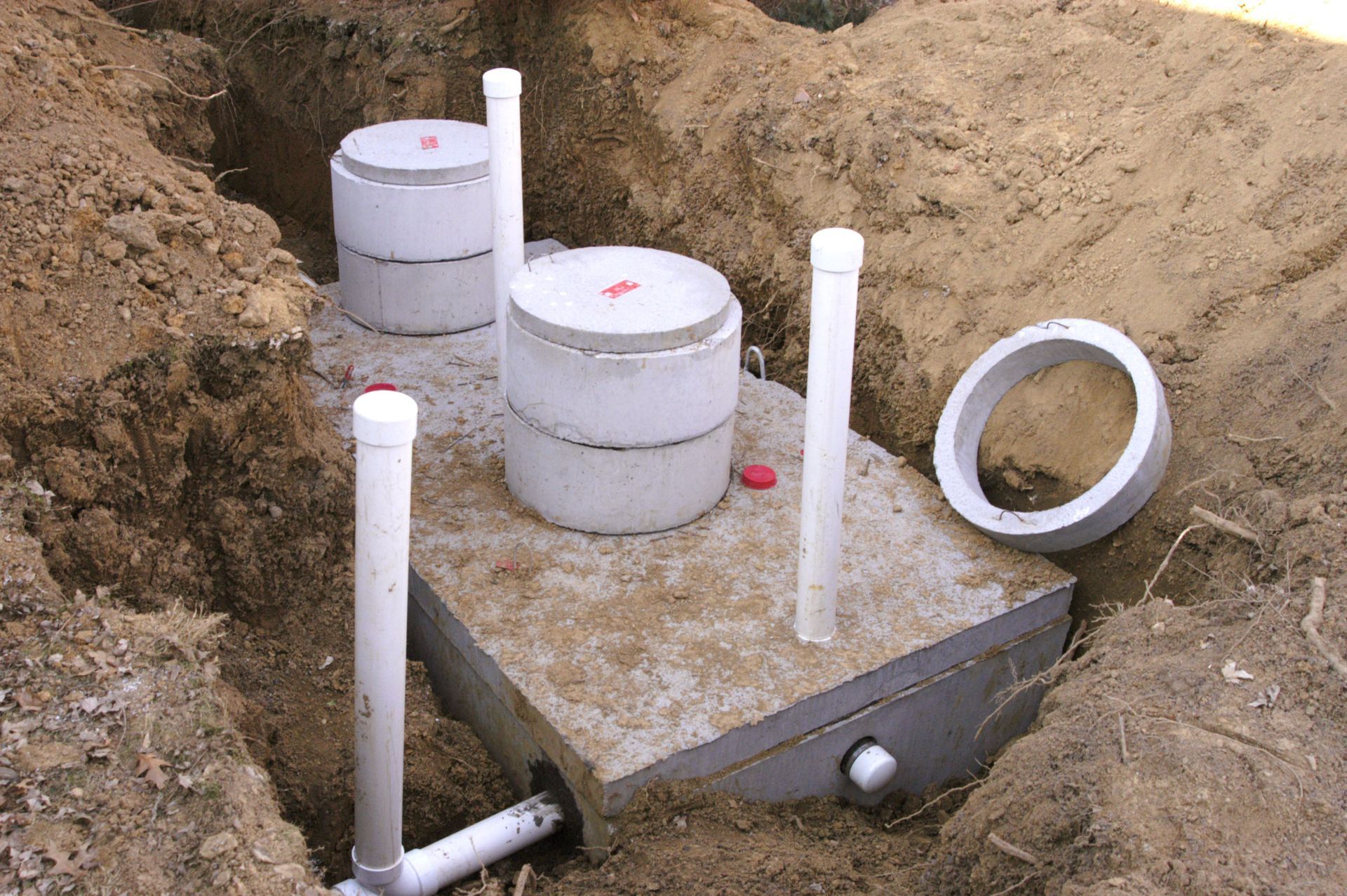
This central core phase involves the careful installation of perforated distribution lines, custom gravel distributions, or modern open-chamber synthetic units across the prepared trenches. The specialized crew fastens these distribution tubes directly to the primary structural tank outlets, ensuring every junction is fully sealed to prevent raw wastewater leakage outside the designated treatment zones. Technicians double check that all distribution orifices are pointed downwards at the perfect angle to encourage even effluent dispersion throughout the underlying aggregate beds. If these components are misaligned by even a fraction of an inch, it can lead to uneven effluent loading, causing one section of the field to fail prematurely while others remain completely dry.
Investing time into verifying these critical interior lines guarantees that the biological treatment area works uniformly, preventing localized saturation and extending the service life of your property infrastructure. Furthermore, prioritizing high-quality materials during this phase prevents future pipe collapse under the weight of the soil, safeguarding your home from backflows.
Finishing Backfilling Operations and Final Topsoil Restoration Works
With all components securely placed and verified by local building inspectors, the final manual step of drain field installations involves carefully filling the open trenches with loose native soil. Workers layer the backfill gently over the protective geotextile fabrics or chamber units, avoiding any direct impacts from heavy tractor blades that could crack or misalign the fresh plastic lines beneath. This careful layering prevents the weight of the dirt from crushing the newly laid infrastructure before it has time to settle naturally.
The finished surface area is then gently graded to form a slight mound, a deliberate design tactic that forces heavy stormwater runoff to travel away from the underground treatment beds. Sowing hardy grass seed over the freshly turned dirt stabilizes the loose topsoil, preventing surface erosion from stripping away the vital protective coverings your system relies upon for thermal safety. Deep-rooting turf also absorbs excess moisture, optimizing the overall efficiency of your new utility asset.
Setting Preventative Maintenance Schedules and Conducting Future System Inspections
A successful project wrap-up transitions directly into a commitment to ongoing preventative maintenance and systematic physical tracking. Scheduling routine structural inspections and professional pumping services every few years keeps solid waste from drifting out of the holding tanks and clogging up your fresh absorption gravels. Homeowners must also practice smart water habits, avoiding excessive laundry loads and preventing heavy vehicles from parking directly on top of the sensitive grassy absorption zones. Partnering with a certified service team allows you to identify early structural settling or minor line blockages before they manifest as massive household emergencies, ensuring your mechanical infrastructure delivers peak operational utility for decades.
Achieving complete long term functionality with your private wastewater system requires a combination of detailed engineering, strict permit adherence, and experienced layout execution. From custom site evaluations and structural design to precision excavation and ongoing preventative maintenance, professional workmanship makes the ultimate difference in performance. Trust the dedicated experts at Southern Septic to deliver flawless results that protect your residential property values and support your family routines. Contact Southern Septic today to book your initial site assessment and partner with the region's leading authority in advanced drain field installations.
Share On: